
Report from Washington, D.C.
NEO Options Discussed
Written by: developer
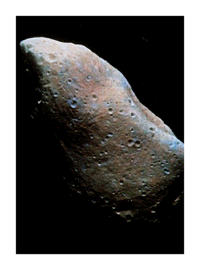 NASA’s Exploration of Near-Earth Objects (NEO) Objectives Workshop, held Aug. 10 in Washington, D.C., was designed to accomplish several objectives: increase the collective understanding of NEOs; solidify what the science community already knows about NEOs; and capture new ideas for future robotic and human missions to NEOs.
Several key themes imaged among the many presentations given over the span of the two day workshop:
- Missions to NEOs are more attractive than a manned Lunar mission based on current propulsion technology;
- We need to reduce uncertainties about NEOs for planetary defense planning; and
- A NEO mission would create new technologies for protecting astronauts against cosmic and solar radiation effects, and would produce habitation modules, life support systems and other equipment needed for long-duration trips, such as a mission to Mars.
According to NASA, NEOs are comets and asteroids that have been nudged by the gravitational attraction of nearby planets into orbits that allow them to enter the Earth’s neighborhood. Composed mostly of water ice with embedded dust particles, comets originally formed in the cold outer planetary system while most of the rocky asteroids formed in the warmer inner solar system between the orbits of Mars and Jupiter. The scientific interest in comets and asteroids is due largely to their status as the relatively unchanged remnant debris from the solar system formation process some 4.6 billion years ago. The giant outer planets (Jupiter, Saturn, Uranus and Neptune) formed from an agglomeration of billions of comets and the leftover bits and pieces from this formation process are the comets we see today. Likewise, today’s asteroids are the bits and pieces left over from the initial agglomeration of the inner planets that include Mercury, Venus, Earth and Mars.
Pictured: In 2001, NASA’s NEAR Shoemaker spacecraft landed on the surface of the asteroid Eros, which is 21 miles long and eight miles thick; photo courtesy of NASA.
This article is part of Space Watch: September 2010 (Volume: 9, Issue: 9).