Featured
SpaceX Launches Starship, Catches Upper Stage in a Space First
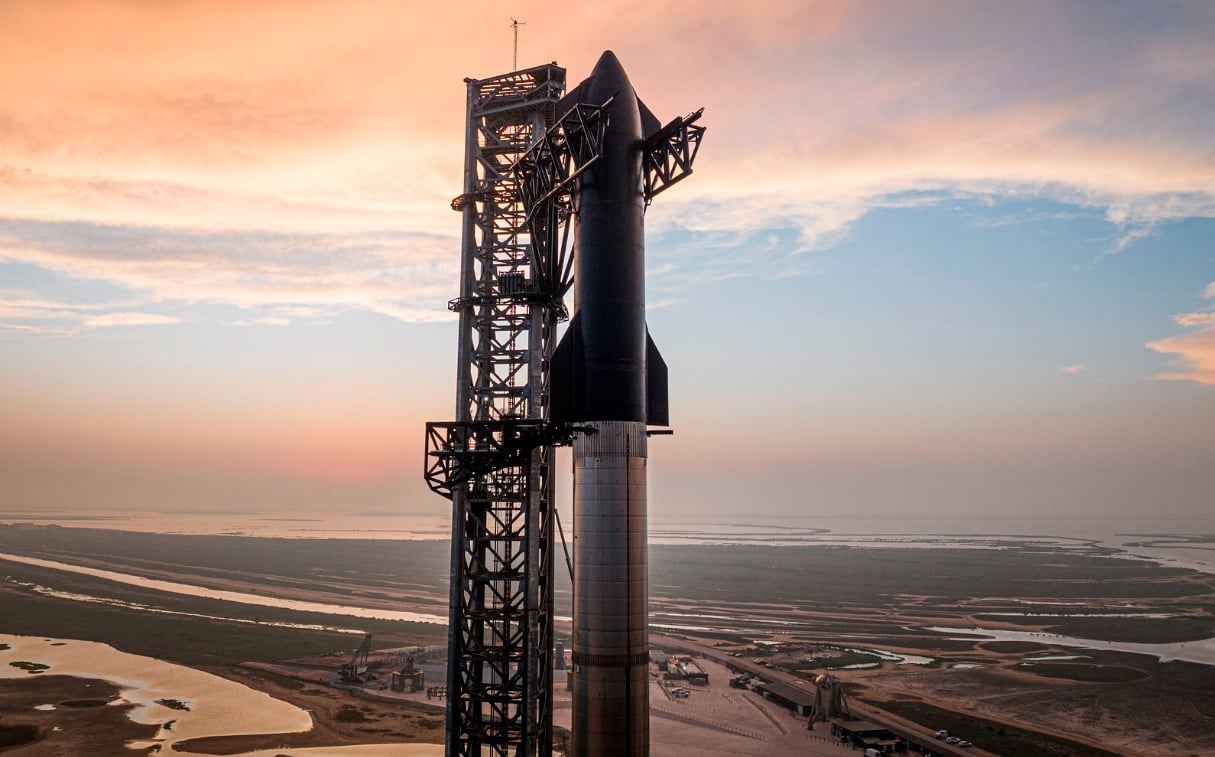 A Starship vehicle on the launchpad at Starbase, Texas. Credit: SpaceX
SpaceX returned its Starship super-heavy lift vehicle to space on Friday, Nov. 13, and Saturday, notched another space milestone by capturing the upper stage on its metal launch mount at its Texas space base.
The launch and capture bookended a week when NASA unveiled up to $10 billion in contracts to establish a Moon base by 2032.
Launch Milestone
SpaceX diverted from a planned landing of its main booster, which splashed down off the Texas coast. The Starship upper stage reached orbit for the second time and deployed satellites before the successful catch back at base.
Starship, the largest launch vehicle ever built, provides the capability to loft more payload and human crew to the Moon, Mars and deeper points in space.
Falcon 9, SpaceX’s most-used launch vehicle, can carry roughly 22 tons into low Earth orbit. Starship can carry more than 100 tons, or more than 200 tons if launched as an expendable.
This increase is crucial for the company planning to launch tens of thousands more satellites for its Starlink constellation and potentially even 1 million AI datacenter satellites. The increased capability also makes Starship a crucial element of exploring deeper into the solar system. Starship’s size allows for larger cargo and infrastructure that may one day enable missions to Mars.
A Race for Capacity
The 15th Starship launch delivered 26 Starlink V3 satellites to orbit, which will increase the constellation’s data capacity. Each Starlink V3 satellite will add 1 terabit of capacity to the constellation, with all 26 satellites equaling delivering the same capacity of 10 Falcon 9 launches carrying Starlink V2 Mini, according to SpaceX.
Amazon Leo, a planned competitor to SpaceX’s Starlink satellite internet, scheduled a ride with United Launch Alliance the same day. However, the mission to deliver Leo satellites into orbit was delayed until Sunday, Nov. 15 and ended in failure about 10 minutes into the launch. ULA’ was set to deliver 40 Amazon Leo satellites.
Amazon Leo has 400 satellites in orbit compared to Starlink’s 11,000. The Leo constellation is designed to consist of more than 3,200 satellites. Consumer service for Amazon Leo is expected to begin before the end of 2026.
Waxing Lunar Business
The same week as these high-profile launches, NASA awarded a series of contracts to advance its Moon Base program. The contracts involve launch services, commercial infrastructure deliveries and a lunar rover.
For the next phase of its Commercial Lunar Payload Services (CLPS) program, NASA awarded contracts to eight companies to deliver science and technology payloads to the Moon. The contracted companies are Blue Origin, Firefly, Intuitive Machines, ispace, Lockheed Martin, Northrop Grumman, SpaceX, and Voyager Technologies.
NASA increased the funding value of the CLPS program from $2.6 billion to $4.2 billion to support initial Moon Base objectives.
“We are building the Moon Base mission by mission,” said NASA Administrator Jared Isaacman. “When our astronauts return to the Moon, they will arrive with the first elements of the Moon Base already waiting for them on the surface.”
Related Articles