Uncategorized
Midterms May Shift Emphasis on Space Science Programs
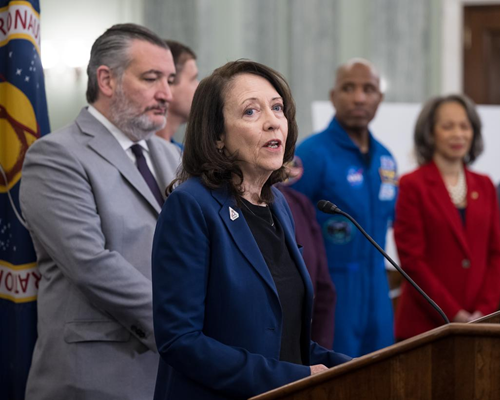 Senator Maria Cantwell and Senator Ted Cruz meet with the crew of the Artemis II mission. Credit: NASA
Space and science policy are in new hands with Democrats poised to take control of the Senate and House. While committee assignments are yet to be decided, the midterm results may signal potential boosts to federal agencies facing budget and personnel reductions. New faces and majorities are coming to congressional committees that oversee science and technology programs, research funding, and space investment.
Across Congress, committees are gaining new members who will decide funding and policy for NASA and other consequential agencies for the space industry. This election comes as space technology plays its greatest role in daily life on Earth. Political party meetings for committee assignments kick off during the week of November 10.
“This is the largest compositional change of the U.S. Congress since 1992, and it may even go further back than that,” said Jack Kiraly, chief of Advocacy for The Planetary Society. “This provides us an opportunity in the space community to educate new members of Congress on space policy.”
Democrats take the majority at a crucial time for federal science. NASA is preparing for the Artemis III mission in 2027, which will test lunar landers for a crewed Moon mission the following year. The agency also revealed ambitious plans for a Moon Base earlier this year.

Jasmine Clark
The shift may benefit NASA science programs, says Bob Walker, who represented Pennsylvania in the House for 10 terms and advises on space policy. Multiple of the newly elected come from science backgrounds, including Senator-elect Abdul El-Sayed (D-MI), an epidemiologist, and Jasmine Clark (D-GA), a microbiologist who scored a House seat to become the first woman with a science PhD elected to Congress.
Senate
The Senate Committee on Commerce, Science and Transportation (CST) will see significant changes with a Democratic majority. Although not part of the midterm elections, Sen. Maria Cantwell (D-WA) is positioned to become committee chair while the current chair, Ted Cruz (R-TX), will become ranking minority member. Additionally, committee members Gary Peters (D-MI) and Cynthia Lummis (R-WY) are retiring, with members from the same parties elected to fill their seats. Committee member Dan Sullivan (R-AK) is in a re-election currently too close to call.
Democrat control of CST may lead to a greater emphasis on federal AI safety standards. Cantwell published a framework for safe and secure AI last month. A Democrat-controlled committee may also place increased scrutiny on the FCC’s recently overhauled licensing rules for satellites.
“Research and development are among America’s most important assets,” said El-Sayed, who will succeed Peters as a Michigan senator. “I believe that our future requires us to invest more and faster.”
A similar shakeup is coming to the Senate Committee on Appropriations. Six-term Sen. Susan Collins (R-ME), who serves as committee chair and on the Commerce, Justice, Science, and Related Agencies Subcommittee, lost her re-election bid to Democrat Troy Jackson. Sen. Jeanne Shaheen (D-NH) is retiring from the Appropriations Committee and the Commerce, Justice, Science, and Related Agencies Subcommittee, being succeeded by Chris Pappas of the same party.
House of Representatives
With Democratic winning control of the House, multiple space-related committees are experiencing leadership changes.
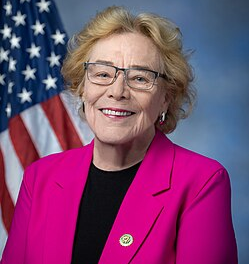
Zoe Lofgren
The committee on Science, Space, and Technology oversees more than $40 billion in agency research and development funding. Committee Chair Brian Babin (R-TX) won re-election but would move to ranking member as Zoe Lofgren (D-CA) becomes chair. Lofgren is currently a member of the Earth and Space Science and the Planetary Science caucuses. With this connection, Lofgren’s elevation could be particularly helpful for planetary science, astrophysics, and NASA research grants.
Democrats will also take the top spot on the Space and Aeronautics Subcommittee, which has jurisdiction over NASA missions, space commercialization and access to space. Rep. Valerie Foushee (D-NC) may take the chair as Mike Haridopolos (R-FL) steps down.
The House Appropriations Subcommittee on Commerce, Justice, Science, and Related Agencies handles funding and oversight for NASA and the National Science Foundation, among other departments and agencies. Democratic control over this subcommittee may open significant pathways for federal science, which has faced major budget reductions in recent years.
NASA Science on the Line
NASA’s budget for fiscal year 2027 is still undecided. In recent years, the agency has faced major potential budget cuts. In 2025, the Trump administration proposed slashing the agency’s funding by nearly 25% for FY2026. This would drop NASA’s budget from $24.4 billion down to $18.8 billion. Congress rejected the proposal, instead voting to maintain funding at $24.4 billion. Congress is next expected to act on whether to maintain NASA’s budget in December.
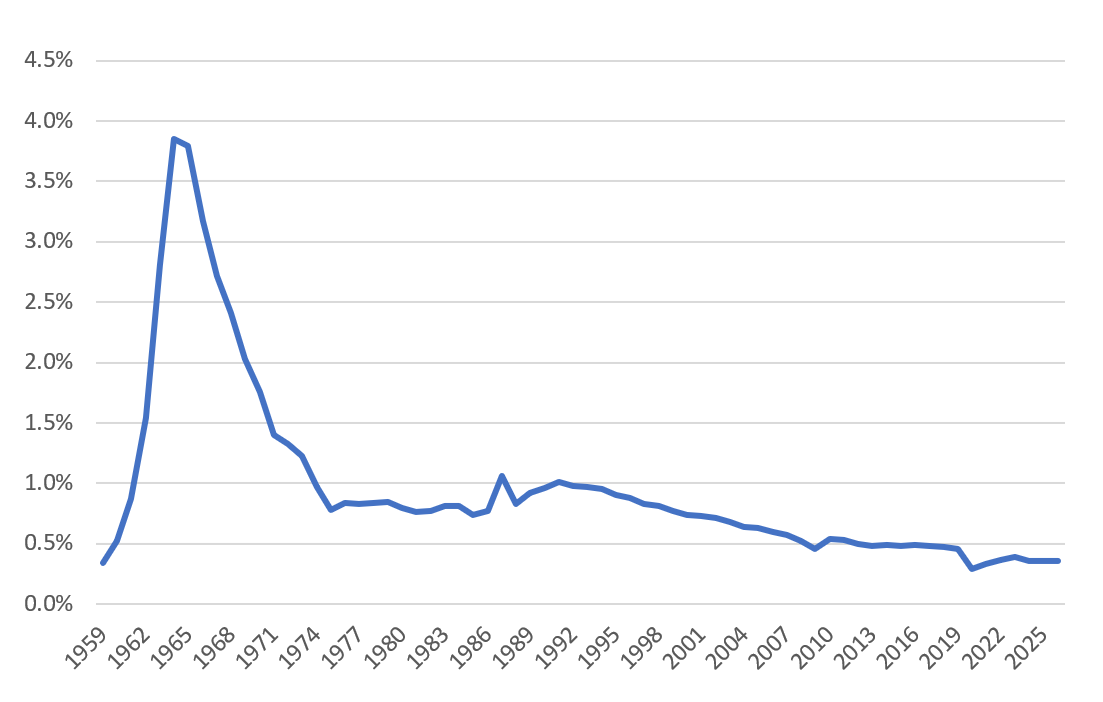
NASA’s budget as a share of the overall U.S. federal budget, 1959 – 2026. Source: Space Foundation
The more than $5 billion cut would drop NASA’s share of the federal budget to its lowest since 1961. As proposed, the reduction could slash NASA’s science program funding 47%. Funding for astrophysics, Earth science, and planetary science would all receive double-digit cuts. Dozens of science missions could also face the chopping block. However, Congress decisively rejected the President’s cuts last year. With Democrats in control of both the House and Senate, NASA has stronger chances of escaping the skinny budget.
Authorization and Proposed Regulatory Overhaul Also Await New Congress
Beyond the budget, NASA also needs a new authorization act. Congress last passed a standalone authorization for the agency in 2017. The most recent NASA authorization became law in 2022 as part of the CHIPS and Science Act. Both the House and Senate came close to passing authorizations this year, but neither bill passed its full chamber.
Additionally, the Office of Management and Budget proposed an overhaul of federal grant regulations that would give political appointees greater authority over the grant review process. Under the proposal, senior political appointees would review grant applications. This would make traditional peer-review recommendations advisory rather than binding. Federal agencies would have more authority to suspend grants if they no longer align with the administration’s policies. Critics have raised concerns that the changes could politicize scientific funding decisions and undermine independent research.

Robert Walker
Massive boosts in launch numbers and commercial investment in recent years are helping to keep space a major national priority. Democrats will control both chambers as Republicans regroup through the last two years of the Trump administration, including adjusting their national strategy for the presidential campaign.
“This opens the Republican primaries wide,” Walker said. “I think we could see half a dozen serious contenders on the Republican side, and there could be multiple big names related to space there.”
 Jeff Gardner is the senior writer at Space Foundation. He can be reached at [email protected].
Related Articles