Featured
Artemis II’s Slow Crawl to the Moon: Inside the 8-Hour Journey to Launch
Written by: Tom Roeder
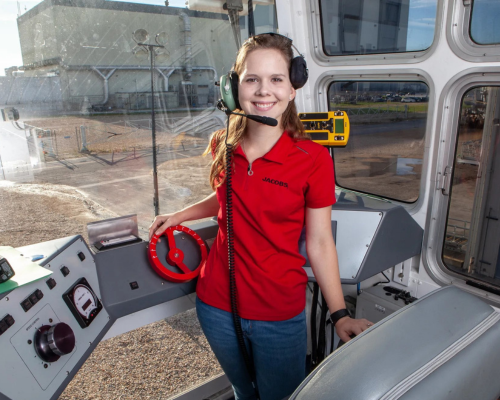
Update: Amentum’s Breanne Rohloff and her big rig got an extra workout Feb. 25, when NASA engineers decided to roll the Artemis II back to the Vehicle Assembly Building at Kennedy Space Center to diagnose a helium flow issue in the launch vehicle’s upper stage. She will get the long drive back on the crawler when the massive machine is deemed ready for flight.
Part of Amentum’s staff at Kennedy Space Center in Florida, Breanne Rohloff drives the world’s largest self-propelled land vehicle, with the 37-story Artemis II launch vehicle poised vertically over her head.
“It’s pretty special,” said Rohloff, an aerospace engineer who is part of a larger team pulling together all launch aspects of the Moon mission launch for the contractor. Rohloff’s ride is the Crawler, built in 1965 for the Apollo program — a machine that remains central to America’s return to the Moon.
How does NASA move rockets?
With four tank-like tracks, more than 16 electric motors, and two diesel engines powering generators, the Crawler is 131 feet long and 114 feet wide. It’s designed to haul cargo as heavy as 18 million pounds. NASA has two of the machines, which have been restored for Artemis after taking part in every Apollo and space shuttle launch.
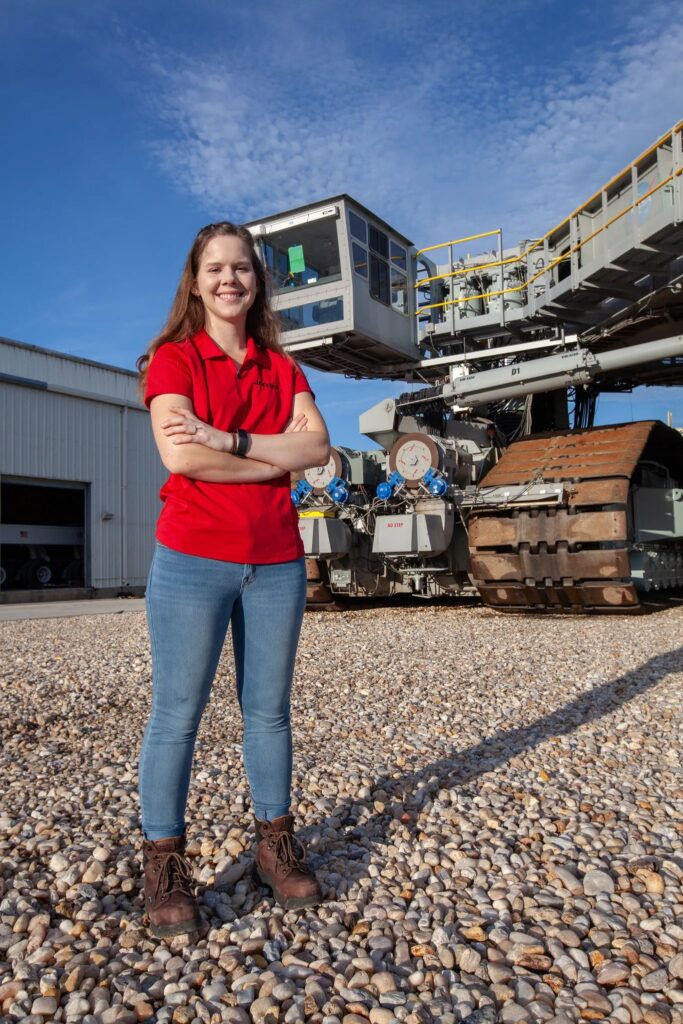
Breanne Rohloff drives the Crawler, the world’s largest self-propelled land vehicle, which will carry Artemis II to the launchpad. Credit: NASA
While Rohloff controls the surprisingly small steering wheel, a team manages the Crawler’s engines, electrical system, and hydraulic pumps while helping guide the machine and its expensive cargo from the Vehicle Assembly Building to the launchpad.
Engineering the 8-Hour Journey to Launch
The Crawler won’t win any races. With Artemis II on top, it will travel half a mile per hour. With the massive load, the Crawler can be challenging to control during the 4-mile, 8-hour journey to the launchpad. The journey from the Vehicle Assembly Building requires precision adjustments to maintain stability across the crawlerway.
Teamwork Behind Artemis II
“Nothing out here happens by yourself,” Rohloff said. “It’s a massive effort in coordination and teamwork.”
Rohloff, with six years behind the wheel, has learned to tame the Crawler, and hopes the Moon mission will inspire people to find their place in the space industry. And while the Crawler has a big load, she feels a burden, too.
“More than anything, it is very humbling to carry the culmination of all these people’s work and all these people’s hopes.”
Related Articles