International Affairs
Washington Updates: NASA awards lunar lander contracts
Written by: Jeff Gardner
What You Need to Know:
- NASA awards lunar lander contracts to Astrobotic, Firefly, and Intuitive Machines.
- Japan renames its air force to the Air and Space Self-Defense Force.
- Rocket Lab announces plans to acquire Iridium Communications.
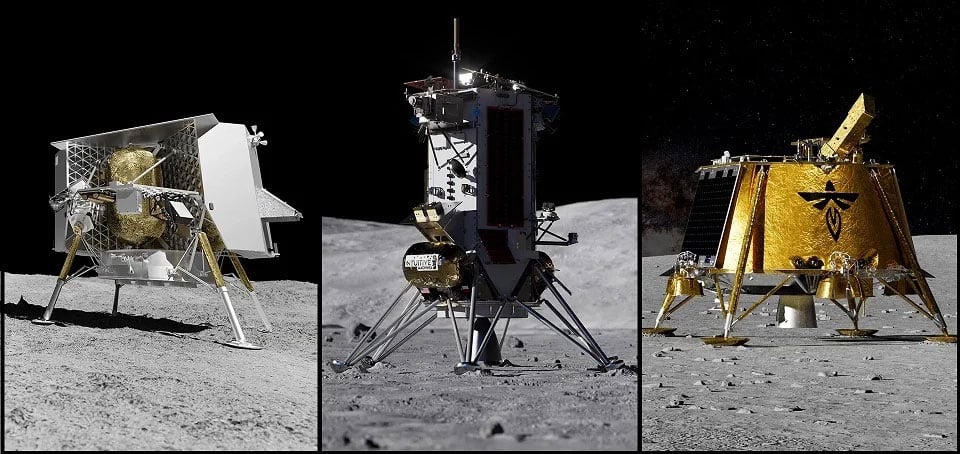
Renderings of the commercial lunar landers from Astrobotic, Intuitive Machines, and Firefly.
Credit: NASA/Astrobotic/Intuitive Machines/Firefly.
United States Space Policy Updates
- NASA awards new lunar lander contracts to Firefly, Astrobotic, and Intuitive Machines for missions in 2028. The contracts have a combined value of nearly $600 million. The agency also provided updates on Moon Base progress, with program manager Carlos García-Galán stating he expects at least one more Moon landing this year with Astrobotic’s Griffin-1. (NASA, June 30)
- The U.S. Army establishes a space operations branch. (Inside Defense, June 25)
- Katalyst Space’s LINK robotic servicing satellite to boost altitude of the deorbiting Swift Observatory. (NASA, July 2)
- NASA advisory committee warns of increased risks aboard aging ISS.
(Payload, June 29)

Japan as seen from the International Space Station. The nation is increasingly focusing on space as a defense domain. Credit: NASA
International Space Policy Updates
- Japan’s government passes a bill to rename the country’s Air Self-Defense Force into the Air and Space Self-Defense Force. This comes as Japan increases funding for space defense capabilities. Japan’s Ministry of Defense stated the heightened focus on space is to ensure rapid awareness in this key domain. The name change will come into effect in April 2027. (Breaking Defense, June 26)
- Botswana becomes the 68th Artemis Accords Signatory. (NASA, June 25)
- Greece commits nearly $400 million to its national space program.
(Protothema, June 26) - Firefly Aerospace plans to launch from Esrange Space Center in Sweden as early as 2028. (Firefly, June 30)
- China establishes a national VLEO Technology Innovation and Industry Development Alliance. (SpaceNews, June 29)
- Japan’s Hayabusa2 spacecraft prepares for a close flyby with asteroid Torifune on July 5. (Space.com, June 28)
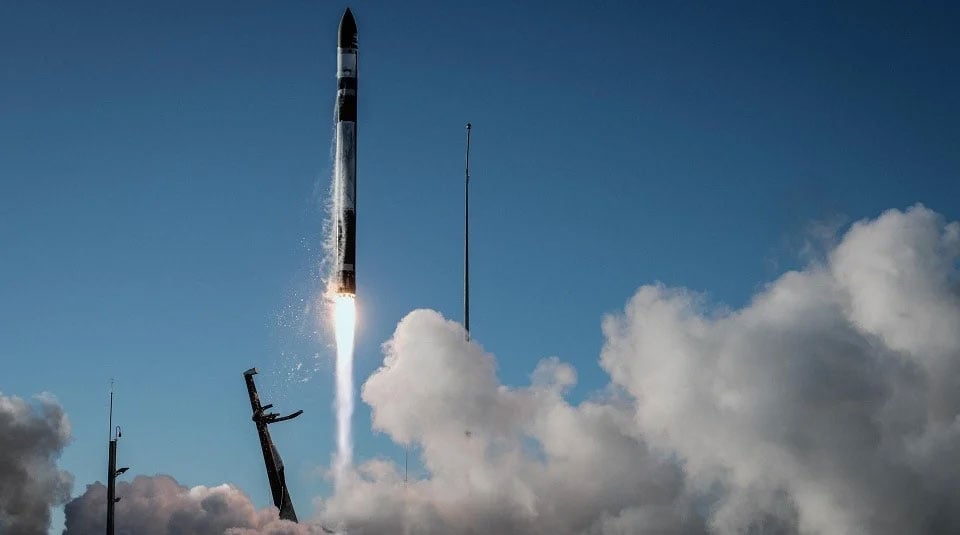
A Rocket Lab Electron launches from Launch Complex 1, in Māhia, New Zealand. Credit: NASA/Rocket Lab
Space Industry Updates
- Rocket Lab announces bid to acquire satellite company Iridium Communications. This $8 billion cash and equity deal would put Rocket Lab in the space communications and PNT industry with Iridium’s 80-satellite constellation in low Earth orbit. It’s expected to close in mid-2027. (Rocket Lab, June 29)
- SpaceX plans to launch Starlink mobile service for U.S. customers.
(Ars Technica, June 26) - Blue Origin plans to change the design of the Cape Canaveral launchpad as it is rebuilt following the New Glenn explosion. (CNBC, June 30)
- Former Aerospace Corp. CEO Steve Isakowitz joins Vast as an adviser.
(Vast, June 30) - Orbital asks the FCC permission to deploy up to 100,000 data center satellites. (SpaceNews, June 30)
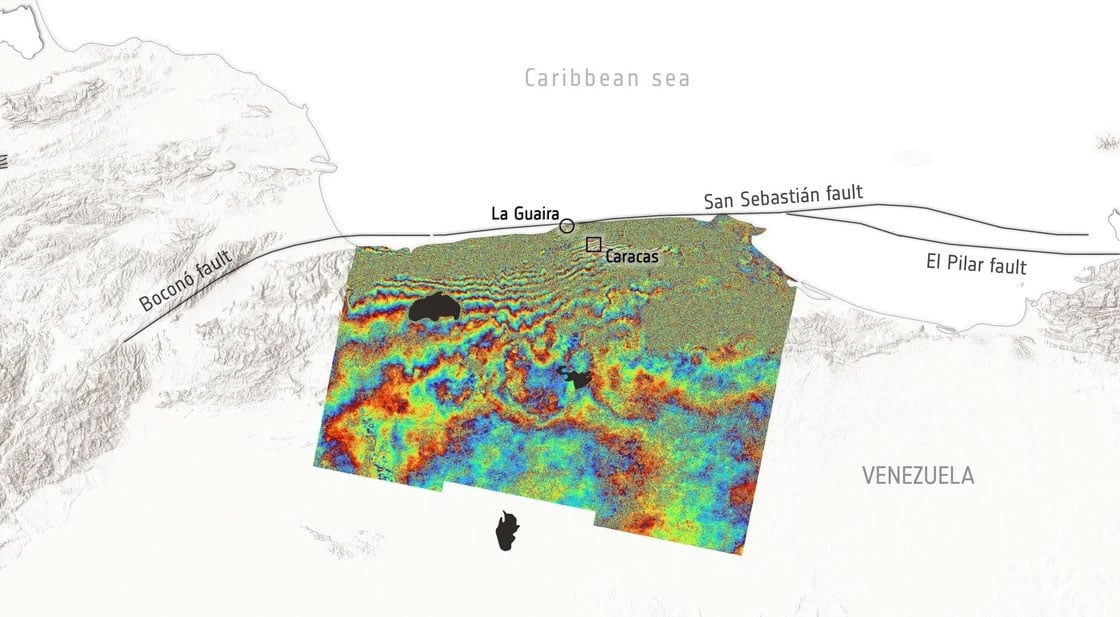
This satellite data shows the area around Caracas, Venezuela, which was hit by two earthquakes on June 24. Credit: ESA
Reading Corner
ESA’s Sentinel-1 shows ground displacement after Venezuela earthquakes
New satellite imagery from the European Space Agency brings insights on the geological impact of the recent Venezuelan earthquakes. The imagery, based on data from the Copernicus Sentinel-1 satellites, shows the extent the ground shifted from June 18 to June 25. The earthquakes, at 7.2 and 7.5 magnitudes, occurred at a shallow depths, which resulted in major destruction.
Read more about the data gathered from the Earth observation satellites here.
Related Articles