Symposium Sessions
Saltzman Reveals Space Force Roadmap for 2040 Requirements
Written by: Tom Roeder
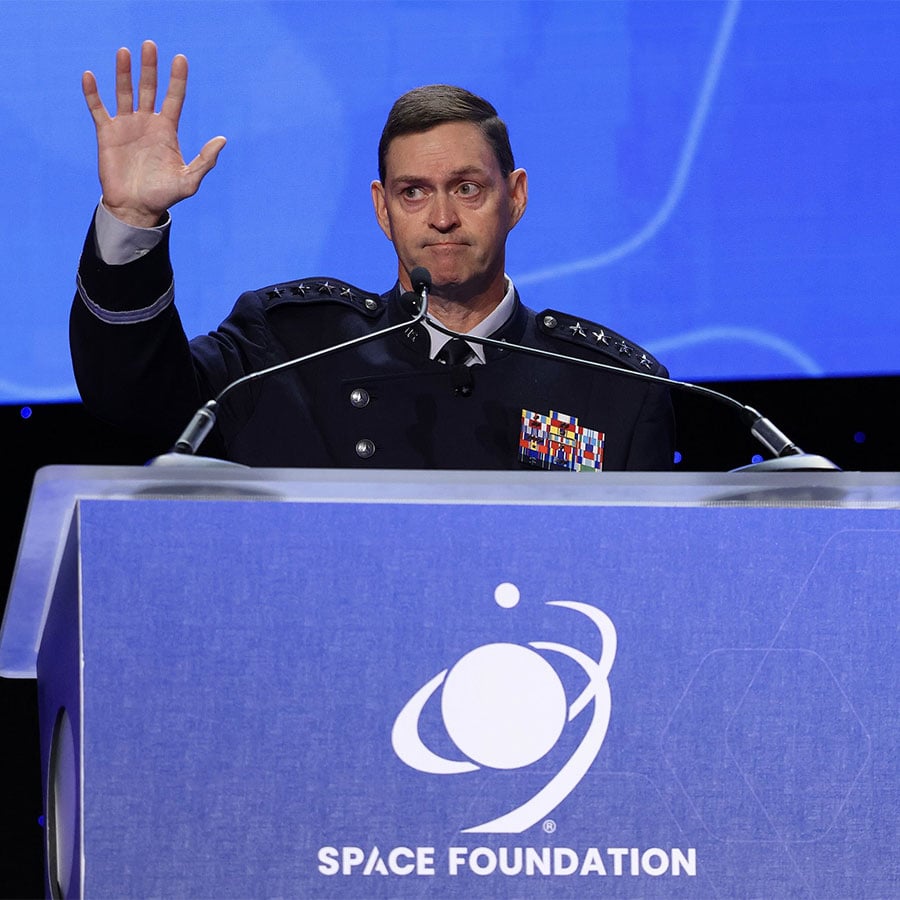 Gen. Saltzman
 The Space Force will need thousands of additional Guardians, hundreds of new satellites, and a suite of new capabilities to fight and win as the space domain grows more contested in the next 15 years, Chief Space Operations Gen. B. Chance Saltzman told a crowd at the 41st Space Symposium on Wednesday.
Saltzman debuted Space Force’s Future Operating Environment 2040, a policy document expected to guide service-level decisions and show defense firms what equipment could be needed in an increasingly contested domain.
“The Space Force we have today is not the Space Force we will need for the future domain,” Saltzman said.
Forged by Global Threats
The Space Force proved its combat capabilities this year in operations against Iran, Saltzman said, by fighting through jamming attacks against navigation and communications satellites and blocking attempted cyberattacks to deliver communications, targeting, and missile warning.
“Flexible, fast and reliable — that is what it means to be a Guardian in today’s Space Force,” Saltzman said. “I don’t have to prove it to you anymore, because Guardians are proving it every day.”
But Saltzman said the anti-satellite operations in Iran are a harbinger of more serious threats Space Force will face in coming years as rivals, especially China, develop in-orbit capabilities and ground-based systems to attack satellites.
Entering his final year as the Space Force’s top officer, Saltzman is sprinting to the finish line, pushing new technologies into orbit to give the United States a leg up over rivals. “We are laser-focused on delivering minimal viable capabilities as soon as they become available,” he said.
A Blueprint for Future Needs
The 2040 paper is expected to push changes, but Saltzman admitted it comes with imperfections. He asked Space Symposium attendees to “read it critically and debate our assumptions.”
Some changes from the 2040 document are needed as soon as 2026, including upgraded communications, targeting, and GPS constellations, he said.
“We want your feedback, but we also want you to use this as a blueprint for our future needs,” Saltzman said.
As the second leader of the nation’s youngest service, Saltzman has delivered unprecedented international cooperation and collaboration with commercial partners. He has also shown that new satellites can go from identified need to launch in months or weeks instead of the years or decades those programs once required. His driving standard for measuring performance: the readiness of the Guardians he leads. “How are they prepared for the demands of space warfighting today and tomorrow?”
Get Space Symposium Updates Delivered to your Inbox!
Related Articles