Symposium Sessions
The Next Great Economy: The Moon
Written by: Jeff Gardner
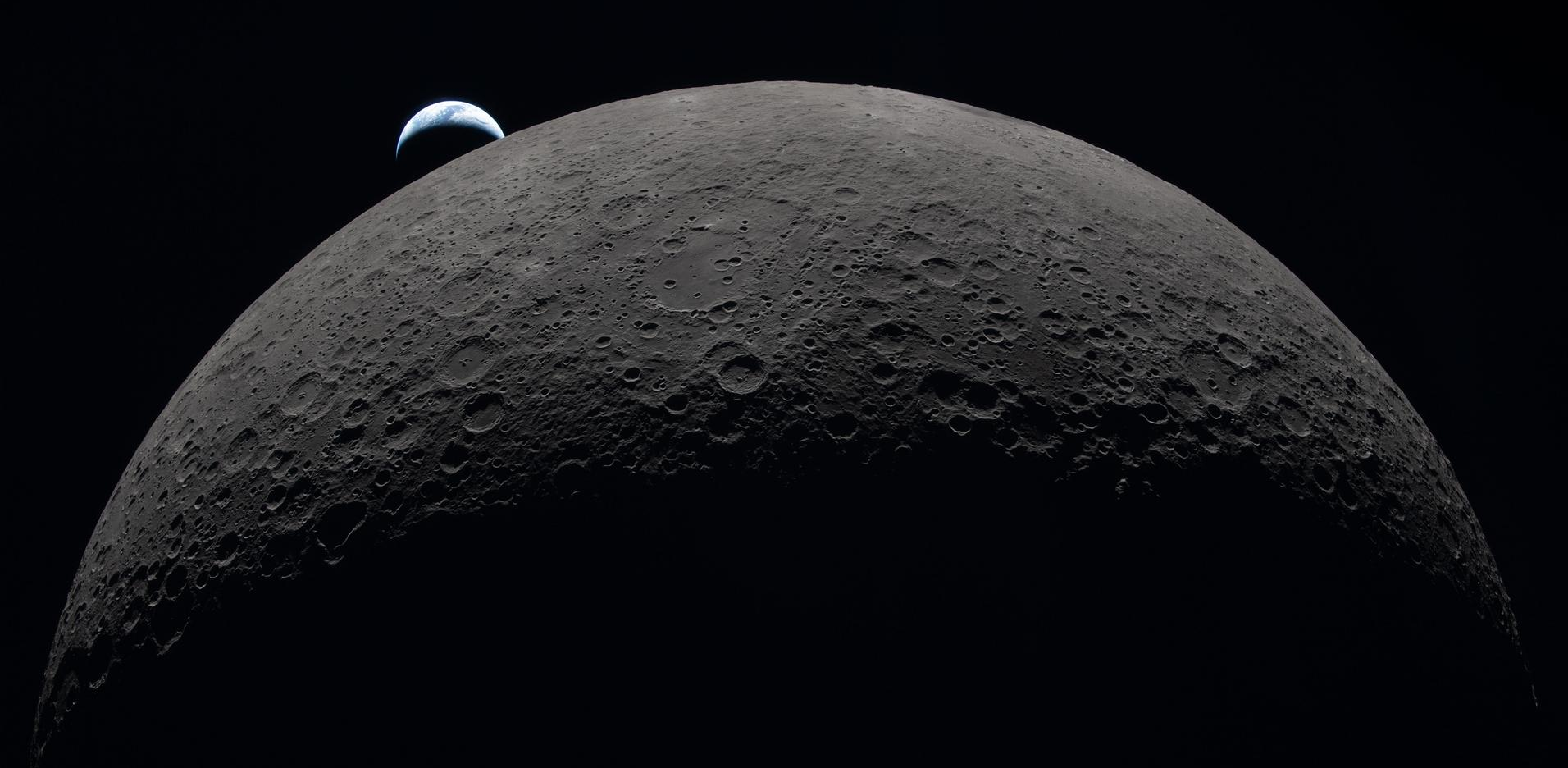 The Moon and Earth photographed during the Artemis II mission. Future Artemis landings will accelerate the cislunar economy. Credit: NASA.
 The surface of the Moon will be far less barren in the coming years. At two featured discussions at the 41st Space Symposium on Thursday, NASA officials, commercial partners and scientists explained the rapidly growing opportunities on the lunar surface. With an ambitious launch schedule described during NASA’s Ignition Day, more commercial partners will be heading to the Moon than ever before.
“The surface of the Moon has become inexorably intertwined with the economy of the Earth,” said Jim Keravala, CEO of OffWorld. “The economy has changed. The world has changed.”
The panelists described a lunar surface transitioning from one of limited government science missions to a more complex economy involving a variety of industries. Financial opportunities include in-situ resource utilization, mining, and the relocation of data centers.
“These conversations are not 10 years down the road or 20 years down the road, they are happening right now,” said Stephanie Brick, founder of Salutogenic Design & Consulting Group.
New Partners Will Help Achieve Lunar Presence
Keravala argued that the lunar surface is at an inflection point, describing the Moon as a continent-sized expansion to the Earth’s economy. This economic potential is anticipated to foster competition and a race among companies to establish permanent positions on the Moon.
“It’s a situation where once one gets started, others will have to follow,” said George Pullen, chief economist at Milky Way Economy.
Some of the issues that have long been identified as problem areas may not be, which will help accelerate the timelines for human habitation, said Jackie Cortese, vice president of Civil Space at Blue Origin. The company has nearly 100 people working to leverage space resources, including regolith, the powdery gray substance covering the Moon’s surface.
“We are working a on project with NASA right now to leverage regolith,” Cortese said. “You can use that regolith to produce oxygen breathable for astronauts in Phase 1.”
In the same morning session, Carlos Garcia-Galan, NASA’s program executive for the Moon Base, explained that the agency has released multiple Requests for Information. NASA needs new commercial partners to build communications and PNT networks, to provide power and to build spacecraft and landers someday capable of 8 megaton capacity.
“Bring us your boldest ideas,” Garcia-Galan said. “This is something we are doing together for humanity, standing on the shoulders of the Apollo program and everything we’ve done in the last 53 years.”
Get Space Symposium Updates Delivered to your Inbox!
Related Articles