Symposium Sessions
Isaacman on the Future of Artemis: ‘This Time, We Stay’
Written by: Jeff Gardner
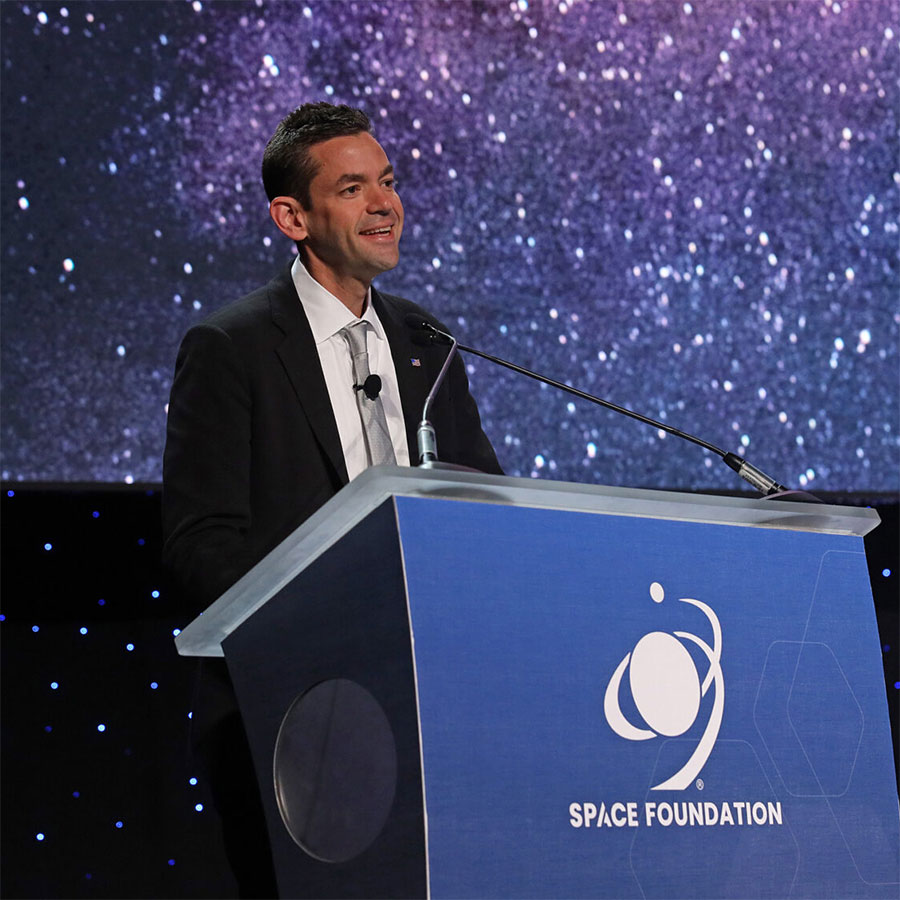
NASA Administrator Jared Isaacman Tuesday morning laid out an optimistic, high-paced vision for the future of the Artemis Program at the 41st Space Symposium. Fresh off the success of the Artemis II splashdown, Isaacman explained the scientific and national security necessities for establishing a lunar base.
“American leadership in the high ground of space is not optional,” he said. “I don’t see how we can achieve superiority if we come in second place.”
Increased Reliance on Commercial Partners
Isaacman criticized the original pace of the Artemis program, with the first mission launching in 2022 and the second in 2026. With a reworked schedule aiming for months, not years, between lunar launches planned to begin in 2027, NASA will increasingly rely on commercial partners for a sustained Moon presence, he said.
“We can’t force a lunar economy or an orbital economy to exist, but we can do everything possible to incentivize one,” he said.
NASA’s Ignition Day in March set an accelerated pace for Artemis, with a robotic lander planned for 2027 and two crewed landings in 2028, all meant to assure that the United States establishes a lunar presence before China.
“It’s the perfect proving ground to master what comes next,” Isaacman said. “Artemis II will be remembered as the moment people started to believe again.”
Get Space Symposium Updates Delivered to your Inbox!
Related Articles