
Systems Tool Kit
Inducted In: 2024, Computer Technology
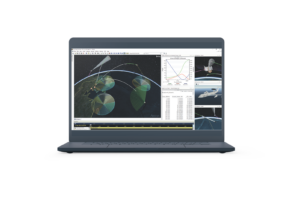
The Systems Tool Kit (STK) is a software package used to model complex engineering systems and applications. The software is a customizable, off-the-shelf package that is used widely by NASA and much of the aerospace community.
It was originally designed to simplify the coding required for programs that needed satellite-overflight-analysis. Over the past 30 years it has been continually enhanced to be applicable to a wide variety of data-intensive applications.
Originally called the Satellite Tool Kit, the name was changed to Systems Tool Kit (still referred to as STK) to represent its broader range of applications. The STK software has had a significant impact on the space industry by shortening the development time of a wide variety of programs.
In 2020 the original developer of the software, Analytical Graphics, Inc (AGI) was purchased by Ansys, Inc.
Related Technologies

Neurala Brain
Inducted In: Computer Technology, Industrial Productivity/Manufacturing Technology
https://vimeo.com/1187451618 Neurala developed a brain-inspired artificial intelligence technology designed to enable autonomous, continuous learning on edge devices. The commercialized technology, delivered through the Neurala Brain and Neurala VIA (Visual Inspection Automation) software platforms, allows machines to learn new visual concepts during operation without cloud connectivity…
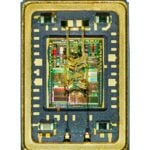
GyroChip® – Quartz Rate Sensor
Inducted In: Computer Technology, Consumer, Transportation
[embed]https://vimeo.com/1083588443/4567ee1646[/embed] The GyroChip is the commercialized variety of a Quartz Rate Sensor developed by BEI Technologies. The sensing device is a small vibrating quartz gyroscope used as an inertial measurement sensor. Measurements of rotational spin rate and orientation are the…

NASGRO
Inducted In: Computer Technology
NASGRO is a software analysis tool that was originally developed by NASA over forty years ago. In 2000, NASA entered into a Space Act Agreement with the Southwest Research Institute (SwRI) with the goal of turning the system into…