
Report from Washington, D.C.
Asteroid Protection Needs Funding
Written by: developer
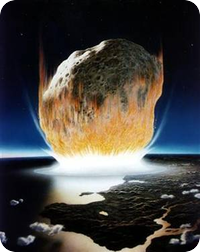 A report released Jan. 22 by the National Academy of Sciences says that the $4 million the U.S. spends each year to identify potentially dangerous asteroids is not enough to satisfy the 2005 Congressional mandate that 90 percent of nearby asteroids 460 feet (140 meters) across or larger be identified by 2020.
Defending the Earth: Near-Earth Object Surveys and Hazard-Mitigation Strategies, written by a committee of scientists, also says that the U.S. should not rely solely on nuclear weapons to defend against an asteroid threat.
NASA says it has found about 85 percent of the largest nearby asteroids (half-mile/1 kilometer wide or larger), but only 15 percent of the 460 foot near-Earth asteroids, and just 5 percent of nearby space rocks about 164 feet (50 meters) across.
According to the report, NASA currently has less than $1 million to research ways to counter asteroid impact. The agency says it would take about $1 billion in additional funding over the next 15 years in order to meet its goal of finding all nearby asteroids that could threaten Earth.
The report lays out two approaches that NASA could take:
- If finishing the survey as close as possible to the original 2020 deadline is considered most important, a mission using a space-based telescope in concert with observations from a suitable ground-based telescope is the best approach;
- If conserving costs is most important, using only a ground-based telescope is preferable.
The report also recommends that NASA monitor for smaller objects – those down to 30 to 50 meters in diameter – which recent research suggests can be highly destructive.
To read the report, click here.
Picture courtesy of NASA.
This article is part of Space Watch: Februrary 2010 (Volume: 9, Issue: 2).