
Beowulf Computing Cluster
Inducted In: 2022, Communications Technology, Computer Technology, Featured, Industrial Productivity/Manufacturing Technology
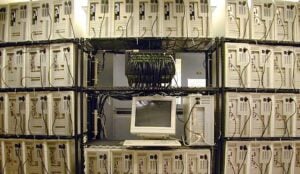
A Beowulf Computing Cluster is a grouping of off-the-shelf computer hardware networked together with fast communication software. The resulting parallel processing power of the collection generates processing speeds faster than most super-computer systems used for complex processing – at a fraction of the cost.
In the mid-90’s however, such a configuration didn’t seem very advantageous. It did not seem remotely possible that a cluster of off-the-shelf machines could come anywhere close to the processing power of the custom-built supercomputers used by researchers at the time.
The state-of-the-art supercomputers available then were large, dedicated pieces of hardware running proprietary software. These were multi-million-dollar systems that required constant maintenance and service from the computer vendors who supplied them. Their high-cost and their scarce availability meant that researchers were always left wanting more time on the system. However, trying to compete with that super-computing power with off-the-shelf equipment was simply unimaginable.
At the time, the Japanese government had made great strides in supercomputing power, and the US was worried about falling behind. A program run out of NASA Goddard was one of the groups tasked with finding a solution.
The goal was to develop super-computing speed that could run on a platform inexpensive enough that individual researchers could have their own workstations. The goal was not just computational speed, but the speed-to-cost ratio. The original target was 1 gigaflop of thruput from a $50,000 system. (A gigaflop is one billion floating-point operations per second.)
The Beowulf cluster achieved that goal – and went far beyond. To put it in perspective you need only look at the systems on the ‘Top 500’ — the ranking of fastest supercomputers in the world. In the mid-90’s that list of the world’s top supercomputers consisted entirely of large, dedicated hardware systems. Today, nearly every one of the supercomputers on that list are cluster systems based on the Beowulf concept.
Related Technologies
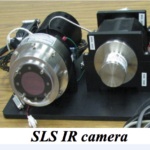
Strained Layer Superlattice (SLS)
Inducted In: Industrial Productivity/Manufacturing Technology
https://vimeo.com/1083588479/a949307161 The Strained Layer Superlattice (SLS) technology developed at NASA’s Jet Propulsion Laboratory is used to manufacture infrared detectors. The enhanced performance and cost-savings of this technology is a significant advancement over earlier technologies. This technology has been employed by…
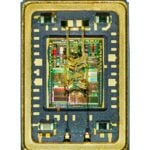
GyroChip® – Quartz Rate Sensor
Inducted In: Computer Technology, Consumer, Transportation
[embed]https://vimeo.com/1083588443/4567ee1646[/embed] The GyroChip is the commercialized variety of a Quartz Rate Sensor developed by BEI Technologies. The sensing device is a small vibrating quartz gyroscope used as an inertial measurement sensor. Measurements of rotational spin rate and orientation are the…
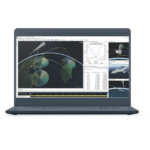
Systems Tool Kit
Inducted In: Computer Technology
The Systems Tool Kit (STK) is a software package used to model complex engineering systems and applications. The software is a customizable, off-the-shelf package that is used widely by NASA and much of the aerospace community. It was originally designed…