
Space Technology Hall of Fame Inductees
The Space Technology Hall of Fame® comprises many extraordinary innovations — all derived from or significantly improved by space research or exploration. To nominate a technology, please visit our Nominate a Technology page to learn more about the Space Technology Hall of Fame® selection criteria.
Search Filters:
Differential air-pressure antigravity treadmill technology originated from research conducted at NASA Ames Research Center focused on mitigating bone loss and muscle atrophy experienced by astronauts during long-duration spaceflight. The technology uses controlled air-pressure differentials applied around the lower body to simulate changes in effective body weight during treadmill exercise. By applying force near the user’s center of…
Read More
Neurala developed a brain-inspired artificial intelligence technology designed to enable autonomous, continuous learning on edge devices. The commercialized technology, delivered through the Neurala Brain and Neurala VIA (Visual Inspection Automation) software platforms, allows machines to learn new visual concepts during operation without cloud connectivity or large, pre-labeled training datasets.
Read More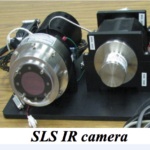
The Strained Layer Superlattice (SLS) technology developed at NASA’s Jet Propulsion Laboratory is used to manufacture infrared detectors. The enhanced performance and cost-savings of this technology is a significant advancement over earlier technologies. This technology has been employed by NASA, industry partners, and academic institutions to develop infrared detection devices for a wide variety of…
Read More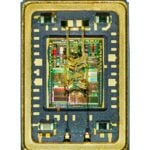
The GyroChip is the commercialized variety of a Quartz Rate Sensor developed by BEI Technologies. The sensing device is a small vibrating quartz gyroscope used as an inertial measurement sensor. Measurements of rotational spin rate and orientation are the heart of many navigation, stabilization and guidance systems. The BEI sensor gained widespread use among a…
Read More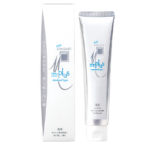
Hydroxyapatite remineralizing toothpaste is a product line from Sangi Co. Ltd – a Japanese based company that specializes in dental care products. Their products contain synthesized hydroxyapatite – a calcium phosphate compound found in bones in teeth. In 1980 the company introduced the world’s first toothpaste which uses the substance to remineralize (repair) damaged tooth…
Read More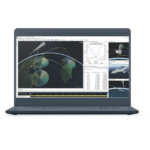
The Systems Tool Kit (STK) is a software package used to model complex engineering systems and applications. The software is a customizable, off-the-shelf package that is used widely by NASA and much of the aerospace community. It was originally designed to simplify the coding required for programs that needed satellite-overflight-analysis. Over the past 30 years…
Read More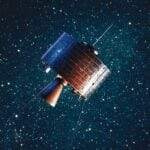
In 1961, NASA awarded a $4 million contract to the Hughes Aircraft Company to design and build the first geostationary satellites. The three satellites, known as Syncom 1, 2, and 3, were individually launched in 1963 and early 1964, and remained active until 1966. The success of this program proved that geostationary satellites –…
Read More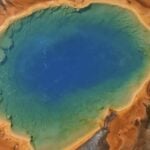
Nature’s Fynd is a food company currently producing commercial meat and dairy substitute products. The protein-rich food is produced from a microbe originally discovered in geothermal springs in Yellowstone National Park. Researcher Dr. Mark Kozubal discovered this fungal microbe while working on a NASA-supported study. This extraordinary microbe was named Fusarium strain flavolapis. The…
Read More
NASGRO is a software analysis tool that was originally developed by NASA over forty years ago. In 2000, NASA entered into a Space Act Agreement with the Southwest Research Institute (SwRI) with the goal of turning the system into a significant commercial product. That agreement is still in place, and NASA and SwRI continue…
Read More
A Beowulf Computing Cluster is a grouping of off-the-shelf computer hardware networked together with fast communication software. The resulting parallel processing power of the collection generates processing speeds faster than most super-computer systems used for complex processing – at a fraction of the cost. In the mid-90’s however, such a configuration didn’t seem very advantageous.…
Read More