
Space Technology Hall of Fame Inductees
The Space Technology Hall of Fame® comprises many extraordinary innovations — all derived from or significantly improved by space research or exploration. To nominate a technology, please visit our Nominate a Technology page to learn more about the Space Technology Hall of Fame® selection criteria.
Search Filters:
Sudden cardiac death (SCD) takes the lives of nearly a half million Americans each year. Some 80 percent die before medical help arrives and those who survive have faced a two-year heart attack recurrence rate as high as 55 percent. The Automatic Implantable Cardiovertor Defibrillator (AICD) gave new hope to these victims by lowering the…
Read More
In 1978, the Science and Technology Laboratory (STL), formerly the Earth Resources Laboratory (ERL), at NASA’s Stennis Space Center (SSC), began its program of image and geographical information system processing of satellite and airplane data. This data-gathering process is known as remote sensing. It is technology that enables meteorologists, scientists, climatologists, and others to monitor…
Read More
The Automatic Picture Transmission (APT) was first transmitted in December 1963 from TIROS VII (Television Infrared Observation Satellite) as an experiment. The purpose was to demonstrate the feasibility of sending images of cloud formations from the weather satellite direct to the user, anywhere on the face of the Earth. The only requirement was that the…
Read More
The physiological monitoring instrumentation was developed to transmit astronaut physiological data to ground stations for monitoring and analysis. This family of technologies opened a whole new world of remote biological monitoring on Earth. Patients in locations away from a medical facility or in transit can be monitored and assisted. For example, heart readings can be…
Read More
The liquid-cooled garment was developed to protect the Apollo astronauts from the high temperatures on the moon. The garment successfully maintained the astronauts – body temperatures at a comfortable level by utilizing a battery-powered mini-pump to circulate chilled water through a network of tubes in the garment. During the 1970s and 80s, several companies –…
Read MoreExcimer Laser Angioplasty, utilizing a laser system initially developed for satellite-based atmospheric studies, is now a powerful instrument for treating heart disease. Excimer laser technology was initially pioneered at NASA’s Jet Propulsion Laboratory for remote sensing of the ozone layer. Other laser types are too hot for delicate coronary surgery and could damage tissue, cause…
Read More
Digital imaging was developed in the mid-1960s to explore the surface of the Earth’s moon. Conventional camera equipment mounted in the unmanned Ranger spacecraft returned distorted, lopsided images from the moon. NASA’s Jet Propulsion Laboratory engineer Dr. Robert Nathan began developing the first operational digital image processing software to address this problem. Digital Imaging –…
Read More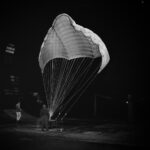
Parawings or hang gliders were developed in 1948 for use as a wing on inexpensive aircraft. In 1958, NASA considered the parawing as a means of returning space payloads to Earth. While NASA did not select the parawing, the military became interested in it for parachuting. In the mid-1960s Pioneer Aerospace and Irvin Industries, parachute…
Read More
NASA has had requirements for anti-corrosion coating for use in many space-related applications. For example, one need was for a superior coating to protect gantries and other related launch structures at NASA’s Kennedy Space Center (KSC) in Florida. At coastal facilities where external structures are subject to the corrosive effects of ocean spray and fog,…
Read More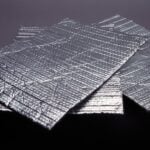
Spacecraft are subject to temperature extremes that range from 400° F above zero to 400° below zero. Protecting astronauts from these extreme temperatures was a prime concern for NASA spacecraft designers. NASA researchers sought after a temperature control technology for the Apollo spacecraft that would provide a barrier which was both lightweight and flexible and…
Read More