
Space Technology Hall of Fame Inductees
The Space Technology Hall of Fame® comprises many extraordinary innovations — all derived from or significantly improved by space research or exploration. To nominate a technology, please visit our Nominate a Technology page to learn more about the Space Technology Hall of Fame® selection criteria.
Search Filters:
One of NASA’s life science research goals is to better understand plant growth in microgravity. NASA found that it was difficult to use traditional plant growth light sources in space because they require considerable power and turn much of it into heat. This means that the experimental system has to have good controls to eliminate…
Read MoreA few decades ago visionaries at Hughes Electronics Corporation believed that it should be possible to produce a digitally-based, direct broadcast satellite (DBS) that would provide services directly to home consumers. This idea was based upon a perceived growing market and the technology and know-how the corporation had from developing satellites for military and telecommunications…
Read More
In the mid 1990s NASA discovered an environmental problem with the material that was being used to lubricate the massive track system on the shuttle mobile launch transporter. Not surprisingly the lubricant requirements are rather extraordinary for this transporter. The product has to provide long-lasting and complete lubrication for a moving set of tracks that…
Read More
Dr. David Hathaway and Paul Meyer of the NASA Marshall Space Flight Center have worked on several criminal cases with the police and the Federal Bureau of Investigation (FBI). Hathaway, a solar physicist is usually busy studying images of violent explosions on the Sun and Meyer, an atmospheric scientist, examines hazardous weather conditions on Earth.…
Read More
Understanding climate changes and the parameters influencing the climate is very important. Infrared imaging is an important technology for gathering useful information however, prior to 1990, no photo-detector arrays had been fabricated that would operate at infrared wavelengths necessary for detecting these changes in ecosystems. In a unique collaboration between the Goddard Space Flight Center,…
Read More
Product identification technology pioneered by NASA for tracking Space Shuttle parts is being used to mark everything from groceries to automobile parts.The application of compressed symbology, a two-dimensional symbol marking system to parts marking was developed at the Marshall Space Flight Center for the Space Shuttle Program, where millions and millions of parts, some as…
Read More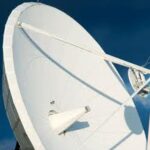
In a large urban area there may be as many as 100 AM and FM radio stations on the air. However, most broadcasts are replete with commercials and sometimes even within the urban area broadcast reception may be poor and if you drive out of the urban area reception is lost. Space technology provided an…
Read More
Using photo-refractive optics technology and experience developed in the Landsat and Skylab Space Telescope programs, NASA Marshall Space Flight Center innovators created an apparatus for detecting human eye defects. The innovators found that different eye abnormalities and diseases cause the eyes to reflect light in distinctly different ways. Vision Research Corporation integrated the technology into…
Read More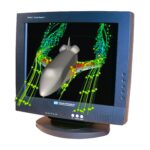
NASA is always seeking ways to enhance its understanding of great masses of data, such as fluid flow around air- and space-craft surfaces. Visual 3-D representations are particularly useful to analyze such data. However, a disadvantage of most 3-D systems is that they require the user to wear special glasses. NASA sought the development of…
Read More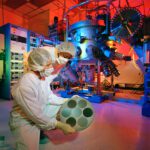
In the 1980s, the Defense Advanced Research Projects Agency (DARPA) initiated a major effort to develop solid-state microwave integrated circuits to replace the tubes, cavities and discrete devices used in microwave radar and telecommunication systems. New advances in semiconductor materials and processing enabled the development of Monolithic Microwave Integrated Circuit (MMIC) Technology. Under a DARPA…
Read More