
Space Technology Hall of Fame Inductees
The Space Technology Hall of Fame® comprises many extraordinary innovations — all derived from or significantly improved by space research or exploration. To nominate a technology, please visit our Nominate a Technology page to learn more about the Space Technology Hall of Fame® selection criteria.
Search Filters:
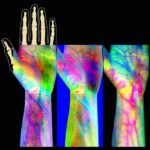
Used in a space exploration support role, hyper-spectral sensors capture reflected energy from observed objects, which is then analyzed to identify attributes not otherwise visible. Working with NASA, the Institute for Technology Development (ITD) has radically reduced sensor size and eliminated the need for sensor or target motion. These innovations have opened a range of…
Read More
Improved Global Positioning System (GPS) technology developed to help the Gravity B Probe test Einstein’s theories has found its way into farming here on Earth. This technology called RealTime Kinematic (RTK) GPS, provided the tools to develop the first auto steered tractor. Today RTK AutoSteer technology robotically controls farm tractors to ensure straight, repeatable crop…
Read More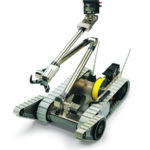
Used in high-risk law enforcement and security operations the PackBot Tactical Mobile Robot incorporates technology originally developed for an early model Martian rover named Rocky-7. Rocky-7 served as a test bed for the twin rovers Spirit and Opportunity now on Mars. The transferred technologies include high-torque control actuators, a high-strength lightweight frame, and riveted sheet-metal…
Read More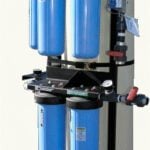
When NASA needed advanced water purification for the Shuttle Orbiter they turned to Umpqua Research. The resulting Microbial Check Valve or MCV system continued to treat Shuttle water sources with a patented iodinated resin system providing both contact microbial kill and residual iodine to supply astronauts with safe drinking water. Looking to the International Space…
Read MoreDense non-aqueous phase liquids (DNAPLs) are chemical compounds that can contaminate soil and groundwater to the point of irreparability.
Read MoreCollaboration between NASA, the United States Army and private industry led to both significant improvement and an important new application for a remarkable medical device called ResQPOD. Successfully used by NASA to treat orthostatic intolerance – a condition of suddenly lowered blood pressure that occurs upon rapid reentry into Earth’s atmosphere – ResQPOD quickly increases…
Read MoreSpills and leaks of all kinds threaten water resources around the world. Today a new technology provides safe and permanent removal of petroleum-based pollutants from water. The basic delivery system grew out of NASA biological encapsulation research and the orbital production of microspheres so uniformly precise they provide calibration standards for scientific and industrial equipment.…
Read MoreHeart disease is the leading cause of death in the United States. Space technology is now helping diagnose and monitor treatments for hardening of the arteries before it causes heart attacks and strokes. Advanced video imaging software developed at NASA’s Jet Propulsion Laboratory provides remarkably accurate and imagery of our solar system and has laid…
Read MoreMillions of infants and adults around the world benefit from nutrition technology that began with space research. In the early 1980s NASA’s Closed Environment Life Support System program explored the use of microalgae as a food supply, oxygen source and waste disposal catalyst on long duration interplanetary missions. Scientists continued work independently after the completion…
Read More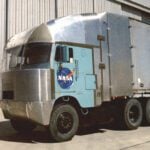
Vehicle design has seen radical improvements thanks in large part to NASA aerodynamics and fluid dynamics research. As vehicles move down the road at highway speeds, they must ‘push’ the air in front of them out of the way. Large trucks in particular must move huge quantities of air, creating high pressure zones around the…
Read More