
Space Technology Hall of Fame Inductees
The Space Technology Hall of Fame® comprises many extraordinary innovations — all derived from or significantly improved by space research or exploration. To nominate a technology, please visit our Nominate a Technology page to learn more about the Space Technology Hall of Fame® selection criteria.
Search Filters:
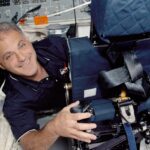
One of the tragedies of the early space program was a fire that occurred in an Apollo module causing the deaths of three astronauts. On investigation of the fire, it was found that some of the materials utilized in the spacecraft, such as polyurethane foam in seats, were highly flammable. NASA initiated an extensive research…
Read More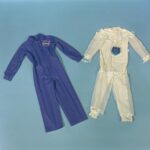
One of the potential hazards confronted by astronauts is the shifting of bodily fluids that occur as a result of changing gravity levels. During the Apollo program, NASA’s Ames Research Center began conducting research on the use of pilot anti-G suits for possible astronaut use. These anti-G suits were developed for pilots of high-performance aircraft…
Read More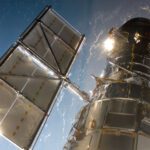
The ability to see faint objects, such as distant galaxies, is a critical element of the Hubble Space Telescope’s mission. NASA researchers found that available technology could not meet Hubble’s stringent requirements. A joint development effort between NASA and Scientific Imaging Technologies, Inc. (SITe) developed a new charged coupled device technology fulfilling the rigorous needs.…
Read More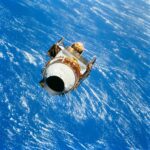
With an ever-increasing market for satellite generated information, new advanced satellite communications methods for transmitting tremendous amounts of information are needed. NASA ascertained that an all-digital, gigabit-capacity communications system was necessary to handle the growing demand and produced the Advanced Communications Technology Satellite (ACTS). Launched in 1993, the satellite uses advanced on-board switching and processing…
Read More
The TEMPUR®️ story begins in the late 1960s when NASA scientists were tasked with developing a material to cushion pilots against the rigors of test flight. They invented a completely new viscoelastic material that slowly reacted to body weight, shape and temperature. The viscoelastic material had soft, pressure-relieving properties and high-energy absorption, and was used…
Read More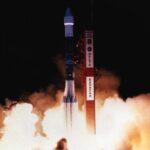
The Global Positioning System (GPS) program began in 1973 when the U.S. military services and the Defense Mapping Agency combined resources to develop a highly accurate space-based navigation system. Functions not originally envisioned, such as communications system synchronization, search and rescue, precision approaches and landings, and GPS-assisted munitions, have come into common usage within the…
Read More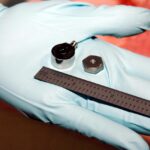
About one decade ago, the Ballistic Missile Defense Organization (BMDO), then the Strategic Defense Initiative Organization, funded Silicon Designs to develop radiation-hardened accelerometers for kinetic energy vehicles to measure the change in velocity resulting from rocket motor firings that occur while changing trajectory. Smaller than a person’s thumbnail, these devices have very low power requirements…
Read MoreProper heart rhythms can often be reestablished by the sudden discharge of stored energy in this pulsed-power device which uses a capacitor originally developed for space-based lasers and accelerators. In the mid-1980’s, the Ballistic Missile Defense Organization (BMDO) funded a company now named Maxwell Technologies to develop a high energy-density thin-film capacitor – a device…
Read More
Based on turbine technology developed for use in liquid propellant rocket engines, this specially designed small, lightweight, high speed turbine pumps blood without damage to the delicate, individual blood cells. A joint effort beginning in 1988 between NASA and a group of doctors headed by Dr. Michael DeBakey led to development of this Ventricular Assist…
Read More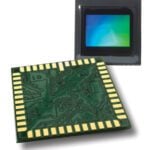
Since the 1970’s when charged coupled devices (CCD’s) were first developed, camera and video companies have been seeking to improve the technology. CCD’s provide good image quality, but they are expensive, power hungry, and with the required accessory chips, bulky. Recognizing the shortcomings of CCD technology, and with the continuing need for lightweight imaging systems…
Read More